Every morning, before your first customer
Here's what happens between 5 and 8 a.m. Central for each store you monitor.
The inventory roster is read.
Every vehicle listed on the site is captured with its VIN, stock number, price, and photo count. This runs once a day per store and costs the site one request.
Changes are confirmed, not guessed.
New units are recorded as added. A unit that's missing is marked pending until it's missing a second day or its detail page confirms it's gone. Price and photo changes are logged against the VIN.
Changed vehicles get a closer look.
Only vehicles that changed, plus a rolling seventh of the lot, get their detail page checked for photos, description, and price. The whole lot is re-verified every seven days without hammering the site.
The website is crawled politely.
Pages, links, and images are checked at a pace the site's own rules allow. Broken links are grouped by where they point. Missing images and dead pages become issues.
Each rooftop is graded.
Market-ready percent and a letter grade from A to F, based on thresholds you can adjust per store. The grade is marked provisional until most of the lot has been checked.
You see status, evidence, and the fix.
Every issue in the dashboard shows what's wrong, where, what we saw and when, and what to do. Alerts go out when a store's checks fail two days running. A weekly report goes out on Monday.
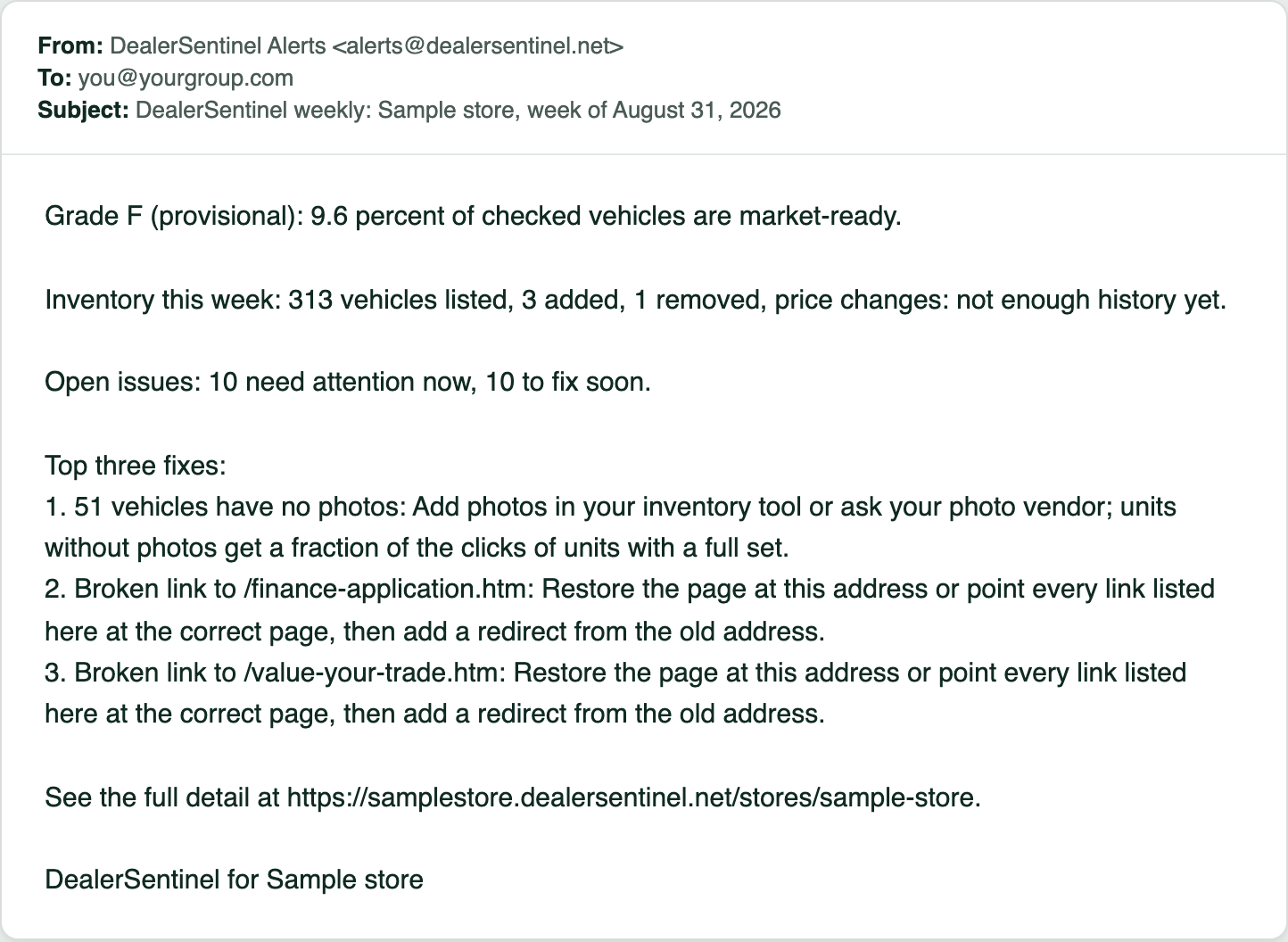
What a Monday report looks like
The weekly email from the demo store, with the store name and address replaced by "Sample store". Grade, market-ready percent, inventory movement, open issues by severity, the top three fixes, and a link to the dashboard.
What DealerSentinel never does
Never reads or stores customer information. Never installs code on your site. Never crawls faster than the site's own rules permit. Never touches a store you haven't authorized in writing. Never runs your competitors' data on the same instance if you choose a dedicated deployment.